Spinal Decompression, built around you
— If you’re dealing with stubborn back or neck pain patterns or have been told you have a disc issue, that may simply mean:
Internal pressure is irritating tissue that needs space to recover.
Start a consult with Dr. Mitch or Dr. Zach — we’ll keep it clear and honest.
- ✓ Costs less than most spinal surgery deductibles
- ✓ Precision-guided therapy (not guesswork)
- ✓ Designed for disc / nerve irritation patterns
- ✓ Decompression is 1 of 3 Therapies in "Our Flux Capacitor of Healing"
You’re Not Broken — But You May Be Compressed
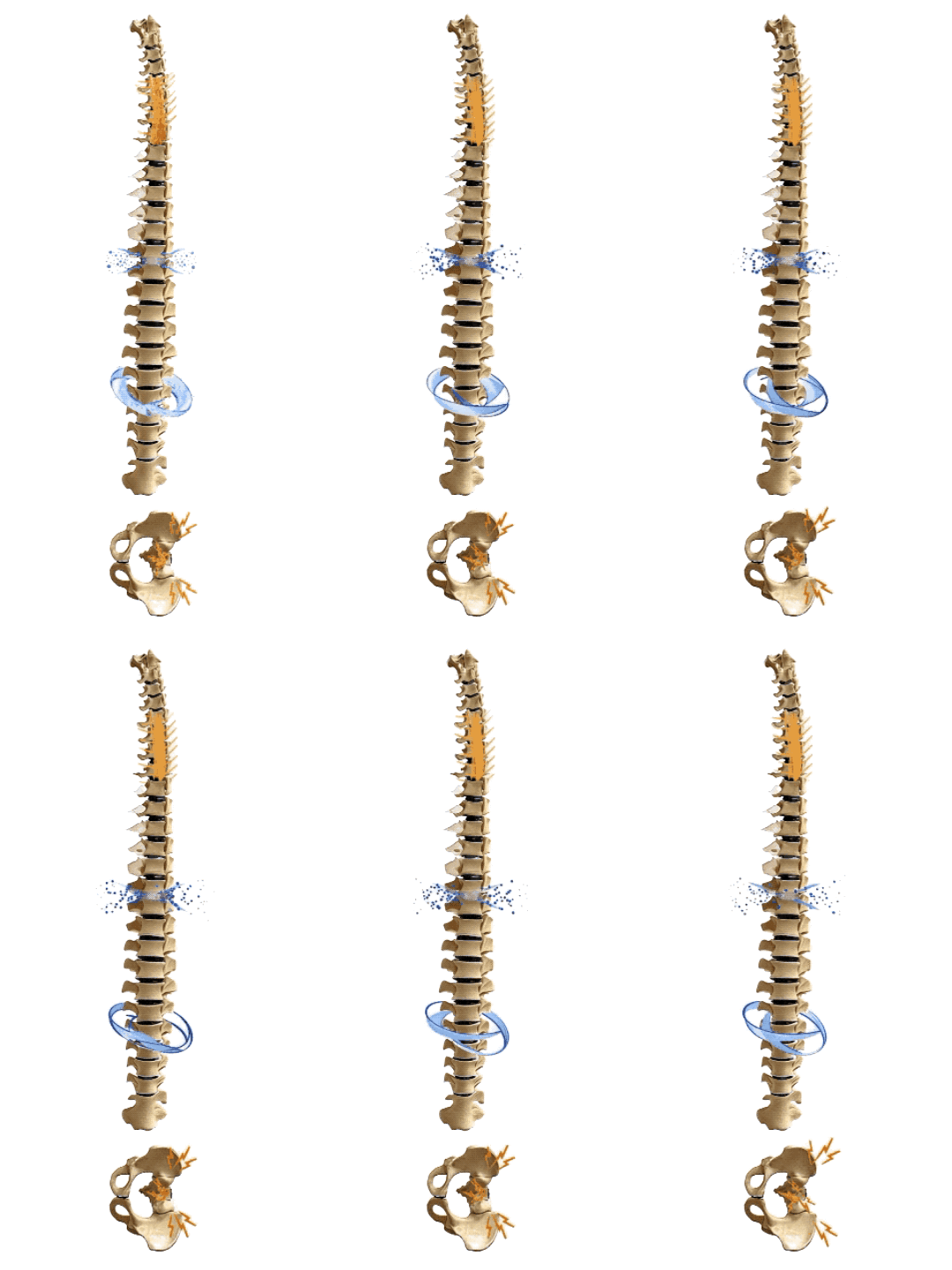
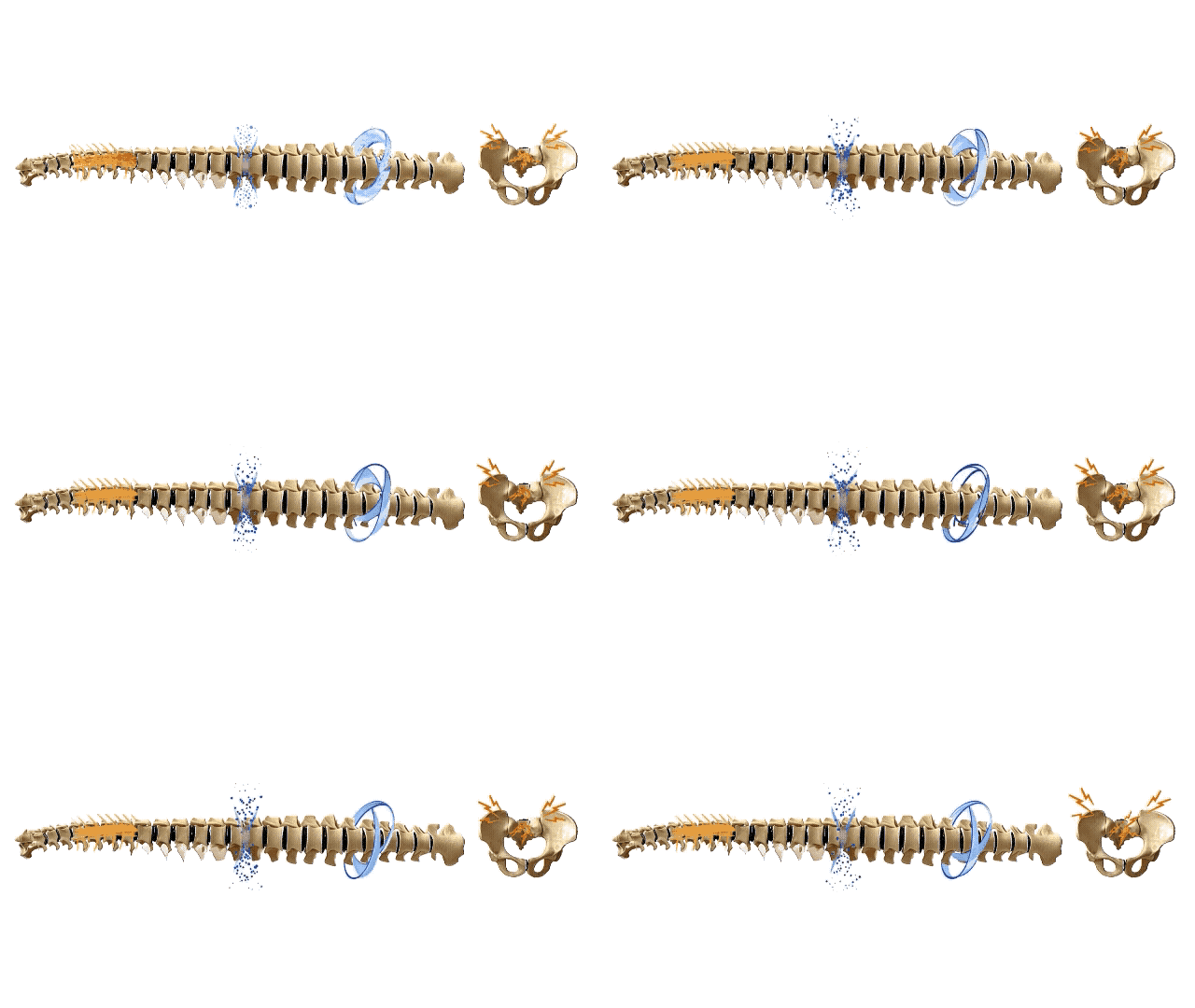
Disc injuries don’t just “stretch out.” When pressure remains high inside the disc, nerves stay irritated and healing slows.
If you’ve tried rest, medication, or injections and relief didn’t stick, pressure may be the missing variable.
How Decompression Creates Space
The disc is not passive tissue — it responds to mechanical forces, so when space is restored in a controlled way, the body has a better opportunity to stabilize and recover.
Basically, when internal pressure changes, the healing environment changes.
Changing Their Story
If you’re here, you’ve probably heard the terms: • Disc Bulge • Herniation • Sciatica • Degenerative Disc
When disc pressure overwhelms tissue and irritates nerves, healing slows down. Decompression creates space — so your body can recover without jumping straight to surgery.
In The Words Of Our Patients
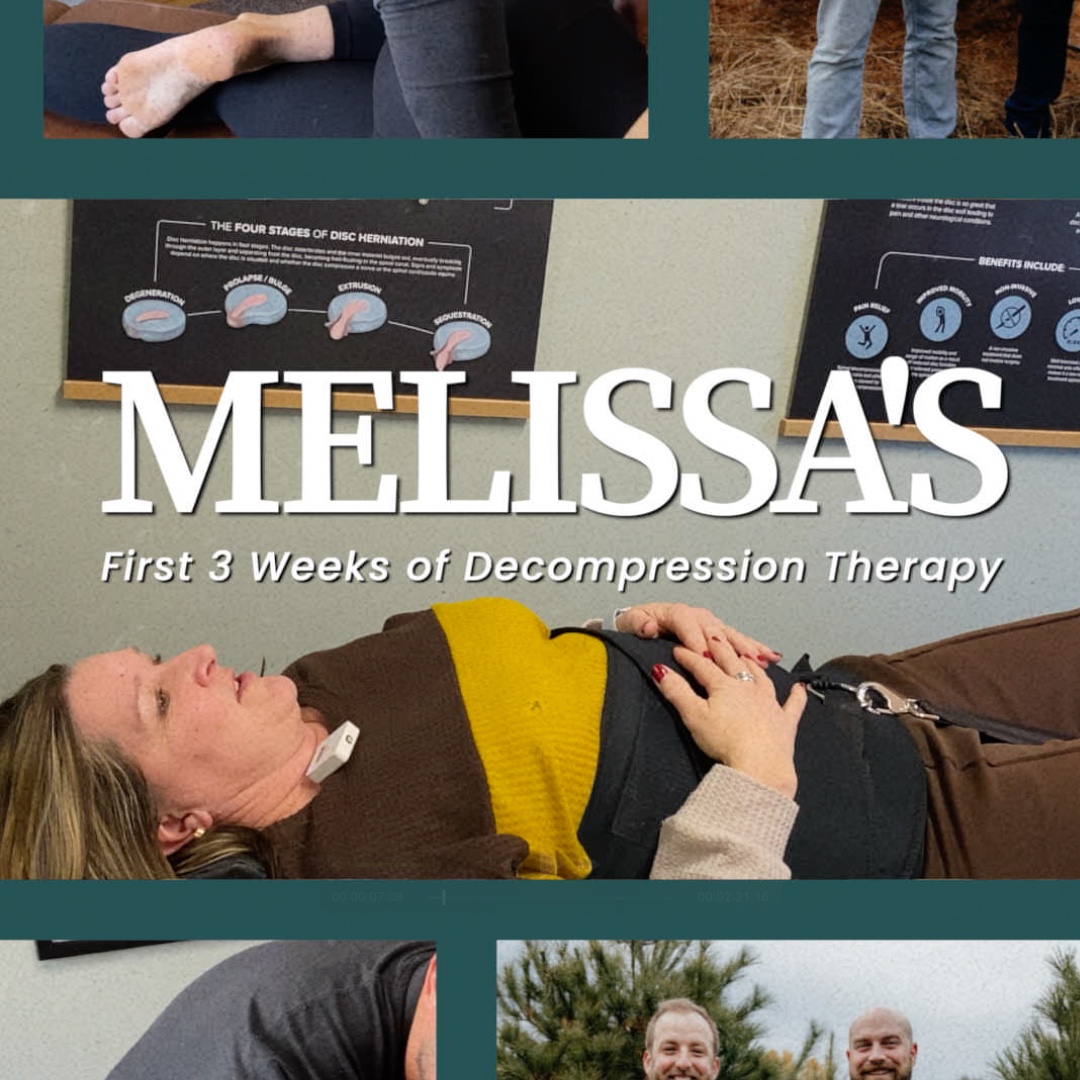
“I knew I didn’t want to have to get surgery at my age, but I didn’t know what else to try after trying everything already! When I found Dr. Mitch something just clicked. His education and care for my back pain was out of this world. After four sessions, I’m finally getting relief and its lasting!”
Melissa B.
Decompression & MLS Laser
Precision Over Generic Traction
A lot of people hear “decompression” and think it’s just traction. It’s not. Generic traction simply pulls. Modern decompression is programmed, calibrated, and specific to your spine.
The goal is to measurably reduce internal disc pressure in a controlled, repeatable way.
No surgery • No injections • No “just live with it”
We review imaging when available and correlate findings with your clinical presentation. Our goal is simple: determine whether internal disc pressure is truly driving your symptoms.
Decompression is recommended only when pressure is the problem — not simply because back pain exists.
Decompression is applied in measured cycles over time. We monitor response, adjust when needed, and move forward with intention.
No guessing. No indefinite care. Just a logical plan based on how discs actually respond to pressure changes.
Angle, force, and timing are calibrated to your body weight, tolerance, and the specific disc level involved.
That precision matters. When pressure is reduced in a controlled, repeatable way, the internal environment of the disc can shift toward stability instead of irritation.
Inside our Flux Capacitor of Healing, decompression forms the foundation phase. Chiropractic restores motion. SoftWave supports regeneration.
When pressure, motion, and tissue repair are coordinated instead of isolated, outcomes tend to be more durable and more stable.
We don’t treat your spine as a single device problem. We map it inside a complete healing circuit.
What This Means For You
Unlike steady traction, our decompression uses controlled cycles and positioning, alternating gentle positive and negative pressure. These natural rhythms help prevent the body from tensing against the pull and support the disc’s natural fluid movement—an important process that depends on changing pressure, not constant force.
The goal isn’t force — it’s creating the right conditions for healing
"The Usual Suspects" of Back Pain
A lot of people hear “decompression” and think it’s just traction. It’s not. Generic traction simply pulls. Modern decompression is programmed, calibrated, and specific to your spine.
The goal is to measurably reduce internal disc pressure in a controlled, repeatable way.
If your primary issue is disc-related pressure, decompression may be appropriate.
Not sure? Ask us directly. We’ll tell you clearly.




What Sessions Look Like
Quick View of Your First Visit ▼
Sessions are about 30 minutes.
Some people notice meaningful improvement early. Others need more time for irritation to settle and movement tolerance to build.
We reassess along the way — not after a preset number of visits.
Your first visit is methodical and personalized. We evaluate, confirm whether pressure is the true driver, and only then move forward with care.
We’ll do a focused spinal and neurological check, and if you have imaging (like an MRI), we’ll review it alongside what we’re seeing clinically. The goal is simple: confirm whether pressure is likely the driver and make sure decompression is actually the right tool.
If it is, we walk you through the plan and what to expect — then we set you up comfortably and calibrate everything to your tolerance before we begin.
Before the session begins, we calibrate the settings to your body weight, tolerance, and the disc level involved. Decompression is programmed in controlled cycles — alternating tension and relaxation — rather than a constant pull.
We start conservatively, monitor your response, and make adjustments as needed. The goal isn’t force — it’s precision.
You remain fully clothed and in control the entire time. If anything feels uncomfortable, we adjust immediately. Communication matters.
The decompression cycles are designed to reduce internal disc pressure in a measured, repeatable way — creating small but meaningful shifts over time.
It’s also normal to feel mild soreness or fatigue as tissues respond to pressure changes. That response is part of the adjustment process — not a setback.
Decompression works cumulatively. Small reductions in pressure over time can create meaningful change in stability, nerve irritation, and overall function.
If it is, we outline a recommended care plan — including frequency, expected duration, and how progress will be measured. If other phases of the Flux Capacitor system would strengthen your outcome, we explain how and why.
We’ll also review practical details such as scheduling, insurance coverage where applicable, and out-of-pocket considerations — so there are no surprises.
You’ll leave understanding your options. From there, you decide how you’d like to move forward.
📘 Pressure Changes the story
What This Means For You
During decompression, you’ll relax on a precision controlled table while it applies gentle pull-and-release cycles to specific areas of the spine.
THIS CONTROLLED RHYTHM IS DESIGNED TO:
- Reduce pressure on sensitive joints and discs
- Help muscles relax instead of bracing
- Create an environment where movement feels safer again
Pressure
When the spine is irritated, the body often protects the area with tension and compression. This can make normal movement feel risky — even when you’re “trying to be careful.
Release
Our decompression uses a slow pull-and-release rhythm to help the spine unload without triggering the body to fight it. Most people tolerate it well because it’s controlled and progressive.
Flow
That cycling can support healthier fluid movement around disc tissue and help calm irritation patterns over time. Not a miracle. Not a shortcut. Just a smarter environment for recovery.
A Precise Decompression Table
Not all decompression therapy or tables are the same! Our cutting-edge table allows us to be more specific, controlled, and adaptable — so the table fits the patient, not the other way around.
Specialized
Multi-directional positioning to match your tolerance with a targeted setup to focus where the problem lives.
Customized
Customizable pull-and-relax timing with session-to-session tracking for consistency.
Comfort
A padded, focused harness supports relaxation with a dedicated team to offer assistance during your session.
What Results Should You Expect?
The Honest Answer: Decompression is not an instant fix. It’s a structural reset.
Most Patients Notice: • Reduced leg or nerve pain • Less sharp radiating symptoms • Increased sitting tolerance • Better sleep
Laughter Is Still Great Medicine
Education matters. But, so does good energy.
We believe a clinic should feel welcoming, steady, and real — not stiff. Dr. Mitch and Dr. Zach invest in their patients and that often means sharing lots of laughs.
6 Ways Decompression Helps
1. Less pressure or “compressed” feeling in the low back
2. Easier movement — bending, standing, walking feels smoother
3. A “lighter” or more open sensation through the spine
4. Reduced tension in surrounding muscles (glutes/hamstrings/hips)
5. Mild soreness afterward — like a workout — that fades within 24–48 hours
6. Better response to other therapies and movement-based care
*Responses vary. If anything feels sharp, worsening, or unusual, we adjust the settings, the plan, and/or pivot to another of our world class therapy options.
Decompression/Flux Capacitor Podcast
Decompression Podcast Details 📜
How 3 therapies—Adjustments, SoftWave, and Spinal Decompression—come together to form our clinic’s “Flux Capacitor” of healing.
If you’ve ever wondered “Is decompression legit?”, “What does SoftWave actually do?”, or “Why put all three together?”… this is your episode
Dr. Mitch and Dr. Zach break down what makes each point of the triangle powerful on its own, and why combining them creates next-level results for patients dealing with disc herniations, nerve pain, chronic low-back issues, and more.
Learn how the docs decide which therapy (or combo) someone actually needs and why diagnosing the source of pain beats chasing symptoms every time!
Reduce Pressure. Restore Motion. Rebuild Confidence.
If pressure is the root issue, let’s address it directly.
Schedule a Decompression ConsultationFAQ
Spinal Decompression Therapy
Is spinal decompression right for me?
Spinal decompression is commonly used for:
- Herniated discs
- Bulging discs
- Degenerated discs
- Facet syndrome
- Failed back surgery
- Chronic neck or back pain that hasn’t improved with chiropractic, physical therapy, injections, or medication
The only way to know for sure is through a full evaluation. If you’re not a candidate, we’ll tell you.
Does decompression actually work?
Published research shows patients with chronic neck or back pain have up to a 91% chance of achieving full or significant pain relief.
Many patients are able to avoid surgery.
Is it painful?
No. Most patients describe it as a gentle stretch. Many find sessions relaxing.
Is this the same as traction or inversion therapy?
No.
Spinal decompression creates negative pressure inside the disc, helping reduce disc pressure and improve nutrient flow.
In a head-to-head study:
Decompression:
– 86% good-to-excellent results for herniated discs
– 75% good-to-excellent results for facet syndrome
Traditional traction:
– No excellent results for herniated discs
– 50% good-to-excellent results for facet syndrome
What The Plan Involves
How many visits will I need?
For chronic disc conditions, research supports approximately 12-24 visits to create lasting structural change.
Some patients improve earlier, but consistency matters for long-term results.
What’s included in a decompression program?
A successful program typically includes, but is not limited to or required by:
Spinal Decompression
12-24 sessions (research-supported dosage)
Chiropractic Adjustments
Usually 12–24 sessions depending on technique
MLS Laser Therapy
12-24 sessions recommended for chronic pain
$75 per session (one area)
Additional $40 per session for a second area
Rehabilitation
Cox Low Back Program (lumbar cases)
Cox Isotonic Neck Device (cervical cases)
Home exercises are essential.
Nutritional Disc Support (optional)
Disc Discovery formula
$80 per bottle
Recommended during the program.
*Each component supports a different part of the healing process
How long are appointments?
Decompression sessions last 20–30 minutes.
If combined with adjustments, laser, or rehab, total visit time may range from 30–60 minutes.
When will I start feeling better?
Some patients notice relief within the first few visits.
For chronic cases, measurable improvement often begins between 6–12 visits, with structural changes developing throughout the full program.
Will the relief last?
More than 50% of patients maintained pain-free or near pain-free status for up to four years after completing treatment.
Long-term results depend on completing the program and maintaining healthy spinal habits.
Investment & Insurance
How much does the program cost?
Decompression plan price varies widely depending on cases, symptom severity and possible combined therapies
Its safe to say that a full treatment plan is almost always less than the deductible of common spinal surgeries.
Flexible payment plans are often available.
Is this covered by insurance?
Some aspects of care — such as adjustments, therapeutic services, and rehab — may be covered.
Decompression, MLS laser, supplements, and certain supportive services are often not covered. Many insurance plans have not updated their policies to include newer treatment technologies.
What if I miss visits?
Consistency matters. Decompression works by building cumulative physiological change. Missing visits may delay progress.
Our Approach
What is the “Flux Capacitor of Healing”?
*The Flux Capacitor of Healing is our name for how we combine three core therapies:
1. Spinal Decompression
2. Chiropractic Adjustments
3. SoftWave TRT
Each therapy does something different — and when used together, they amplify results.
Think of it as structure + motion + regeneration working at the same time.
*Not every case needs more than one therapy, but we will honestly and safely guide your treatment and adjust as you progress.
How does decompression fit into The Flux Capacitor?
Spinal decompression addresses the disc itself.
It reduces pressure inside the disc, improves nutrient flow, and creates the environment needed for disc healing.
In the Flux System, decompression is often the foundation when disc injury or nerve compression is present.
What do the other two therapies add?
Chiropractic Adjustments
Restore proper spinal movement and alignment.
When joints move correctly, pressure distributes more evenly — which helps protect the disc while it heals.
SoftWave TRT
Stimulates cellular repair and blood flow.
It supports tissue regeneration and helps calm chronic inflammation.
Why combine them instead of doing just one?
Because pain rarely comes from one single issue.
Disc pressure, joint restriction, inflammation, and muscular imbalance often coexist.
• Decompression reduces disc pressure
• Adjustments restore movement
• SoftWave stimulates repair
When combined strategically, the therapies reinforce each other — often leading to faster progress and more durable results.
Do I need all three?
Not always!
Some patients only require decompression and adjustments.
Others benefit from adding SoftWave to accelerate tissue healing.
Your evaluation determines what if any combination is appropriate.
We don’t add therapies unless they serve a purpose.
What’s the potential benefit of combining them?
When used together appropriately, patients often experience:
• Faster reduction in nerve irritation
• Improved mobility
• Stronger long-term stability
• Reduced likelihood of recurrence
The goal isn’t just temporary relief. It’s restoring the spine’s ability to function well under normal life stress.
THE FINAL QUESTION
If you’re wondering whether decompression is right for you, the first step is a consultation and evaluation to determine candidacy and build a personalized plan.
Patient Testimonials

Holly P.
Midwest Chiropractic is truly the best chiropractic care in Minnesota. We drive an hour to be seen by Dr. Zach and Dr. Mitch. They have helped everyone in our family from herniated discs, to chronic pain, to injury recovery of the ankle and knee-that PT alone was not helping. I could go on and on about what makes their approach different than others.

Dani T.
I recently had a fantastic experience at Midwest Chiropractic and Wellness working with Dr. Zach! The entire team at the clinic is super knowledgeable and friendly. Scheduling is easy, and I completely trust them with my care. They've been incredibly helpful in creating a clear treatment plan, and the results from the softwave treatment machine on my stubborn hamstring injury were excellent. I highly recommend them for their expertise and top-notch patient care.